
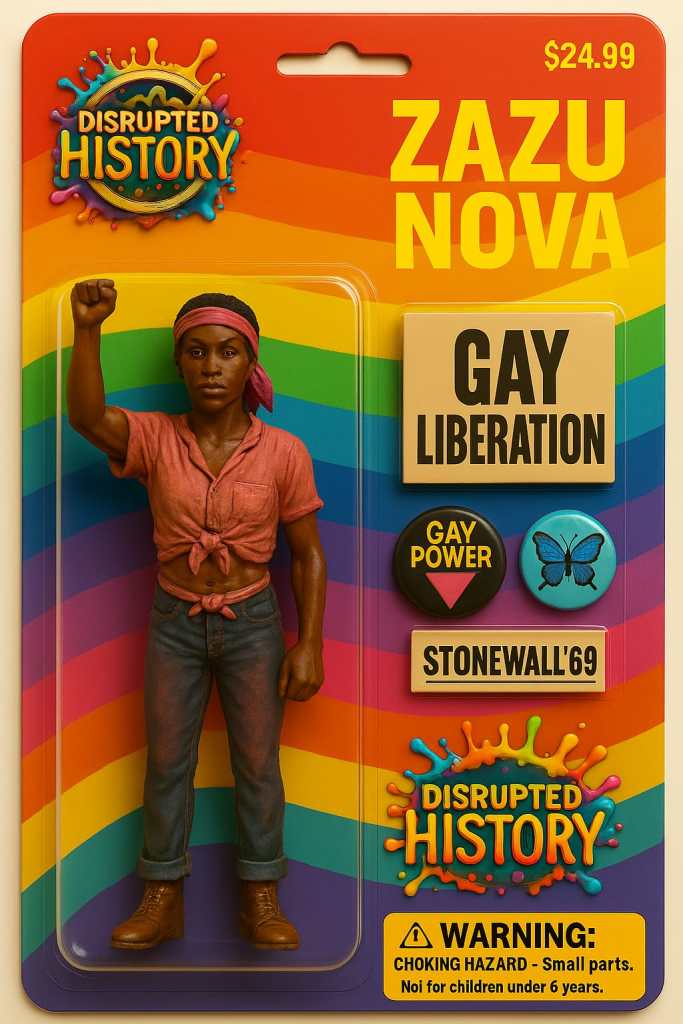

“Zazu Nova, Where Are You?”
In what I hoped to be an act of allyship, I tried to bring the activist Zazu Nova into my recent blog about how AI gendered action figures could be a ‘toybox’ for classroom critical thinking… but it seems that the world had other plans.
In preparation for the activities described in that post, I had gone searching for the leaders of the 1969 Stonewall Uprising. I wanted all of my students to be able to see themselves in history. I wanted them to see the diversity of history… and, in the case of Stonewall, I wanted them to see some of the (perhaps unexpected) faces of resistance to injustice. I wanted students to see snapshots of an often unseen history – a history of everyday people who stood up for their beliefs, who fought against the odds, who took risks, who questioned, who challenged, and who led.
I wasn’t looking for those familiar names that history so often allows to rise.
I was looking for those whose voice had perhaps been too often overlooked or had been silenced, whose contributions were deserving of some additional note.
That’s when I came across the story of Zazu Nova.
I had never heard of Zazu Nova before last weekend.
Nova was a Black transgender woman and self-described “Black Queen” of the West Village, NYC. By some accounts, she was among the first to resist police brutality at the Stonewall Inn on a fateful June night of violence in 1969. A figure of defiance and dignity, she stood for so much of what has so often been overlooked by mainstream history texts. It is, in my experience, so rare for stories such as hers to be told. Stories of Black queer resilience, transgender leadership, and grassroots liberation.
If we are to teach history inclusively, to consider the needs of all students, then we must make efforts to allow all of our students to see themselves in the history that we teach.
So, perhaps in a reflection of my own privilege and naivety, I was shocked to find that all reference to her had been removed to her role in the Stonewall Uprising from a US government website. I had heard that such ‘scrubbing’ of the past was being carried out. I was aware of this erasure of the past. But I had not experienced it first hand.
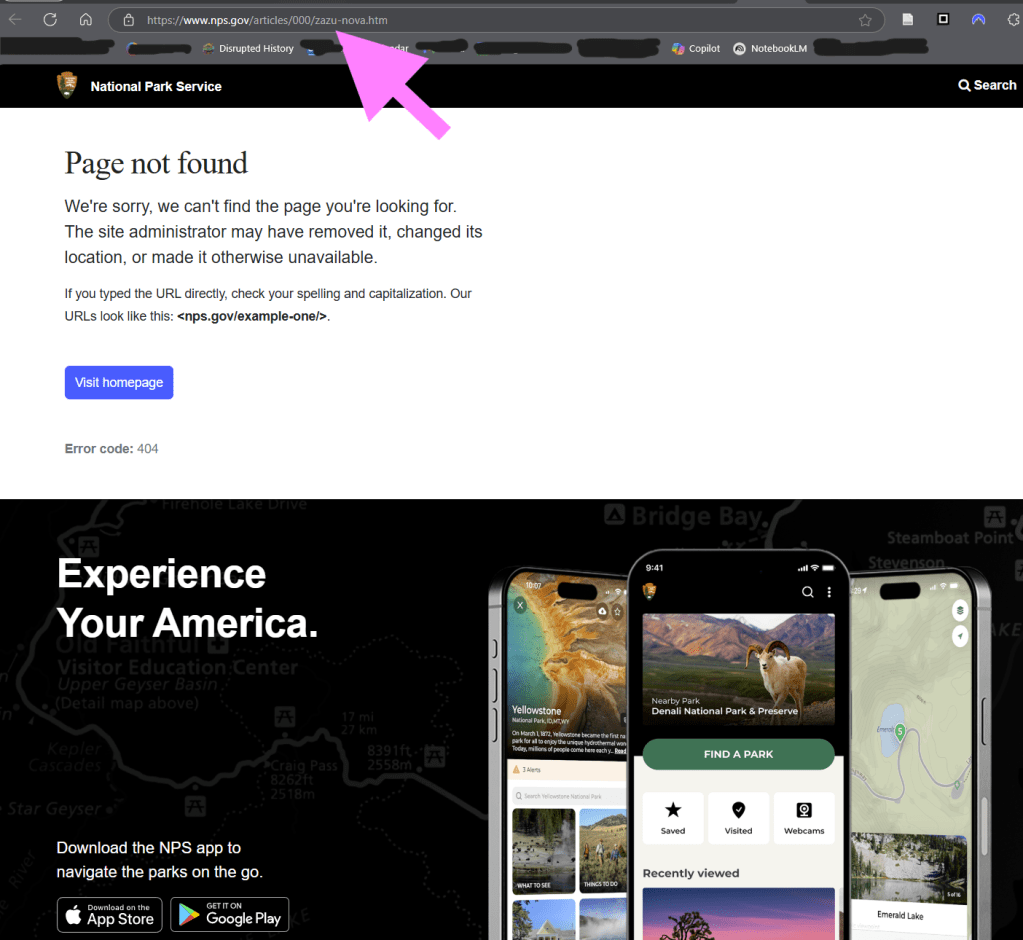
This changed when I followed a link about Nova from Good Housekeeping’s feature article on the leaders of Stonewell to an official National Park Service page about her.
When I followed the link I found an Orwellian erasure of the past, a void. The page related to the life and achievement of Nova – a fellow human being – was gone. By omission, history had been ‘rewritten’ and the experience of a person ‘deleted’ from the public record.
In this moment of discovery, I felt a moment of recognition. I was reminded of the warnings of historian Timothy Synder.
Take responsibility for the face of the world. The symbols of today enable the reality of tomorrow. Notice the swastikas and the other signs of hate. Do not look away, and do not get used to them. Remove them yourself and set an example for others to do so.
Sometimes an erasure is a sign of hate. In this moment of discovery, I could not look away.
Reflection on Intent & Values
I had intended to include Zazu Nova in this activity not just to teach more fully and inclusively about the past, but also to model through my blog how we, as teachers, might open space for our students to see themselves in the past and to imagine themselves as agents in building a better future.
Behind the ‘light-heartedness’ and ‘fun’ disguise of the AI-figurine generation activity was a serious goal: to create learning environments that are inclusive, reparative, and future-oriented. This is a purpose behind the ‘slow teaching pedagogy’ that I propose teachers could endeavour to follow in a history class.
I’m increasingly guided by the belief that history must do more than simply recount, explain, or analyse the past.
History must be more than a teaching and assessment of the ‘big six’ historical thinking skills … (of which we seem to spend an inordinate amount of time on the first five while overlooking explicit treatment of the ethical dimension of history).
History must challenge, inspire, and reveal.
History pedagogy must not merely teach what is. It must teach for what can be.
It must help students imagine who they could be.
History in an age of AI is a call to ethical action.
History educators are called to help build wisdom-based society, to go beyond knowledge and educate people to think, to evaluate evidence and the human story in the light of values.
This is why I propose that we work towards building an AI-infused generative, reparative, and transformative history pedagogy.
It’s why my research focuses on student agency – civic, global, and personal. History pedagogy must seek to give voice and agency to students.
It’s why I chose, on this occasion to try to include the story of Zazu Nova in my example of a teaching activity.
And it’s one of the many reasons why her erasure matters.
Censorship and Silencing: The Wider Crisis
Nova’s disappearance is not an isolated error.
It is part of a wider campaign of censorship in the United States that is targeting inclusive, evidence-based history teaching in schools, museums, and public institutions.
As the American Historical Association (AHA) and the Organization of American Historians (OAH) warned in their joint statements*:
“New policies that purge words, phrases, and content that some officials deem suspect on ideological grounds constitute a systemic campaign to distort, manipulate, and erase significant parts of the historical record.”
“The scrubbing of words and acronyms from the Stonewall National Monument web page, for instance, distorts the site’s history by denying the roles of transgender and queer people in movements for rights and liberation.”
“This is neither history nor patriotism. An uncomplicated celebration of American greatness flattens the past into a parade of platitudes devoid of the context, conflict, contingency, and change over time that are central to historical thinking.”
Educators, and history educators in particular, must not be complicit in this campaign of erasure. We cannot remain silent. We cannot remain neutral. As Desmond Tutu stated: “If you are neutral in situations of injustice, you have chosen the side of the oppressor.” Educators have a responsibility to help young people to embrace their civic and global responsibility and duties, and exercise effective, active and ethical citizenship.
Historian Timothy Snyder cautions history teachers and students of the consequences of silence, neutrality, and complicity with unjust acts in his powerful On Tyranny: 20 Lessons from the 20th Century.
He urges us all to challenge injustices when we see them. He cautions against a conformity with values that are inconsistent with human rights, against ceding our power as citizens to those who act to exclude and oppress.
“Much of the power of authoritarianism is freely given. In times like these, individuals think ahead about what a more repressive government will want, and then start to do it without being asked.”
He reminds us to support institutions…
“Defend an institution. It is institutions that help us to preserve decency. They need our help as well… Institutions do not protect themselves. They fall one after the other unless each is defended from the beginning. So choose an institution you care about – a court, a newspaper, a law, a labor union – and take its side.
He may well have added to his list those institutions that preserve our historical record and public memory. It’s important to take a stand to support our museums, our historians, our memorials, our archives, and our libraries.
Finally, Synder urges us to remember our professional ethics.
“Recall professional ethics. When political leaders set a negative example, professional commitments to just practice become more important.
In schools, in teacher practice, and in scholarship, the call is clear: we must stay true to our values, to speak up, and to stand up.
We must teach the full story of history to the best of our ability. It is our responsibility as teachers, as citizens, and as individuals within the great human family.
What Teachers Can Do: Digital Resistance & Critical Tools
We are not powerless in the face of the digital erasure of history.
We are teachers. And that means we are builders of futures.
Here’s some ideas of what we can do.
- Investigate. Teach students to use tools like the Wayback Machine to retrieve erased pages. Help them to become digital detectives, piecing together the truths others wish to bury. A quick demo of how to use the Wayback Machine – the digital archive of the internet – is provided in the video inserted below. This video will show you how to make the erased pages of the internet – like that dedicated to Zazu Nova – reappear. Every history teacher is also an archivist. When the present deletes the past, we must teach students how to retrieve it.
- Integrate ‘the erased’ into the curriculum. Don’t wait for permission. Make Zazu Nova and others visible again in classroom activities, assessments, and inquiry. Perhaps her story might be just one of a full and inclusive range of AI-generated action figures that your students build through the collection of primary and secondary sources. Do what is just and right. Teach ethics to students. That’s our responsibility as teachers… and essential in the era of AI.
- Model ethical resistance. As Snyder says, recall professional ethics. Teach the standards of historical evidence, sourcing, and context. Insist on academic integrity. Insist of students justifying claims based upon a rigourous and open-minded examination of the full range of available evidence. Teach the difference between fact and opinion.
- Create generative learning. Use activities like AI-generated historical figurines not just to learn content, but to prompt deeper construction of meaning. Generative learning is a theory is all about the active integration of new ideas into the learner’s existing ways of seeing the world. The main idea of generative learning is that, in order to learn with understanding, a learner has to construct meaning actively so ask hard questions and probe for deeper responses: Who do we remember? Why them? Who is missing? Why? Whose history do we teach? Is our understanding of the past supported by verifiable evidence? Is this perspective the only perspective? What is the consequence of this? What should and can we do about it?
- Support democracy and its institutions. Publicly defend schools, libraries, museums, and others facing pressure to conform to narrow ideological visions. Encourage students to be knowledgeable, engaged and active as citizens, as members of their communities, classes, and families. Teach both the rights and responsibilities of being a citizen.
- Be an ally. Teach our students to use whatever privilege or ability they have to stand up for justice, to act ethically and courageously, and – if the occasion presents itself – speak up for those whose histories are being erased. Model this behaviour yourself as a history teacher and citizen.
Reclaiming Agency: Why This Matters for Students
When we censor the past, we narrow students’ vision of what is possible.
We steal from them the role models who might inspire them, the struggles that show them change is possible, and the complex truths that help them become thoughtful, resilient citizens.
My PhD research asks how we can foster student agency through a generative, reparative, and transformative history pedagogy.
At its core this research rest on a simple belief.
If students are to act meaningfully in their world, they must first see the world as it truly is – and see themselves as part of its ongoing story.
Civic and global agency rests upon the development of personal agency.
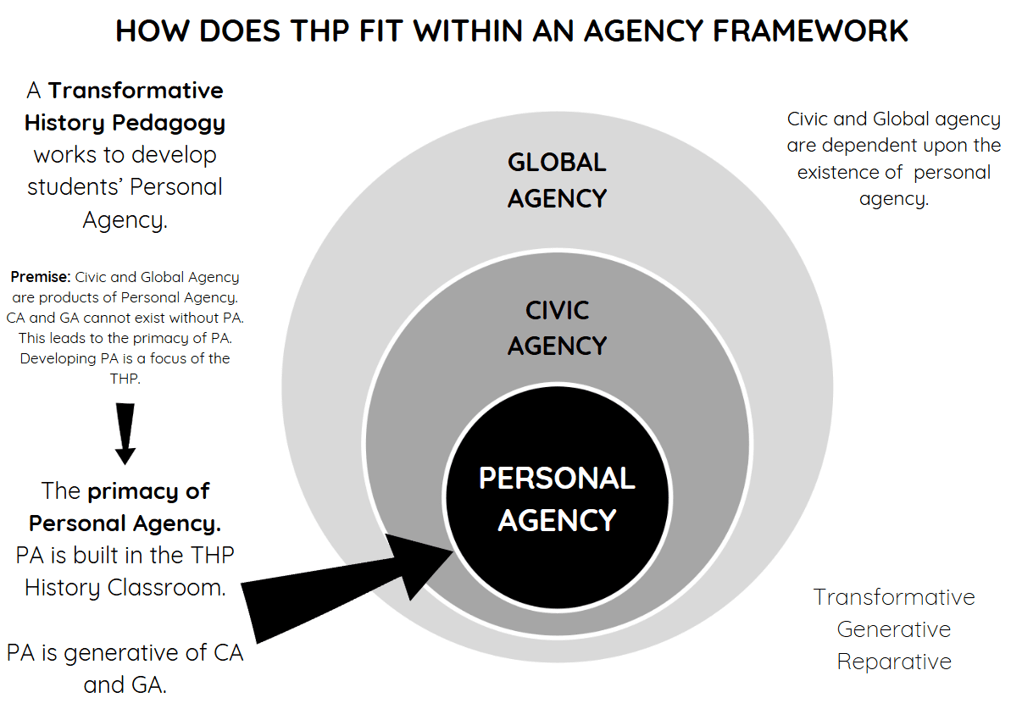
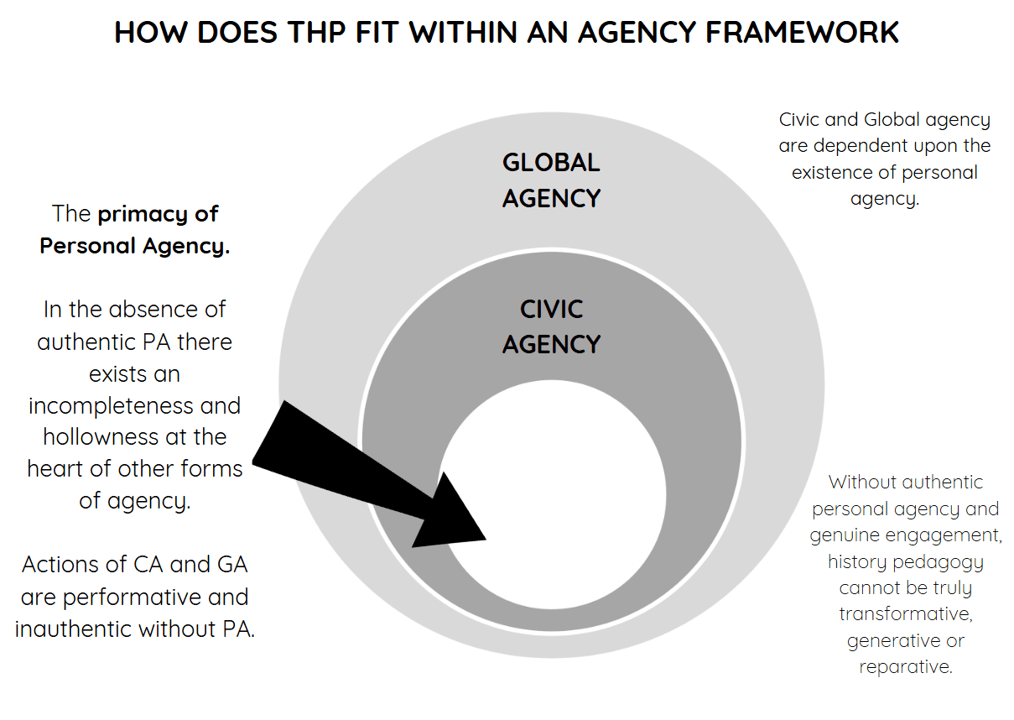
At its heart, this pedagogy is about more than teaching history; it’s about empowering students to act.
A technology-infused, transformative approach to history allows students to see how their voices matter in shaping their communities and tackling global challenges.
In a world where the stories of Zazu Nova are erased, we must teach students not only to find these, but – if necessary – to write them back into our shared human story.
Be the One Who Stands Up
There is a time for every purpose. Now is not the time for silence. Now is the time to teach courageously, to speak the truth, to be upstanders for justice, and, when required, to model ethical resistance. As Snyder reminds us:
Stand out. Someone has to. It is easy, in words and deeds, to follow along. It can feel strange to do or say something different. But without that unease, there is no freedom. And the moment you set an example, the spell of the status quo is broken, and others will follow. Be as courageous as you can… Set a good example.
As I write this, I am reminded of a challenge put to me at the beginning of the 2025 academic year:
It is important for … schools to be aware of the risks that arise should they lose sight of the reasons why they exist. That can happen, for example, when they unthinkingly conform to the expectations of a society marked by the values of individualism and competition…
[We] are encouraged to promote a wisdom-based society, to go beyond knowledge and educate people to think, evaluating facts in the light of values.
[To] educate people to take on responsibility and duties, and exercise active citizenship. … The curriculum must help the students reflect on the great problems of our time, including those where one sees more clearly the difficult situation of a large part of humanity’s living conditions. These would include the unequal distribution of resources, poverty, injustice and human rights denied.
History teachers are called to be something other than neutral technicians of memory. We are builders of futures, custodians of a common past, perhaps sometimes even upstanders for justice.
By focusing on ethics, community, connection, and future-oriented inquiry, we can disrupt the traditional model of history education and make it a subject that not only connects students to the past but also inspires them to shape the future.
Let’ s recommit to teaching a full and inclusive story of the shared human experience.
(PS: By the way, you can see the October 2024, USNPS page on Zazu Nova by clicking HERE. Thanks, Wayback Machine. You can view a screen capture of this page at The Scrapbook.)
*See the AHA–OAH Joint Statement on Federal Censorship of American History and the AHA–OAH Statement on Executive Order “Ending Radical Indoctrination in K–12 Schooling”.
To learn more about Zazu Nova visit:
 Disrupted History
You must be logged in to post a comment.