
Students need guidance in how to best use Generative AI to support their learning. Teaching the teachers how to teach the students about the use of Generative AI is essential.
This week was significant in our school’s ongoing journey to enhance teaching and learning through thoughtful integration of generative AI. In my role as AI for Teaching and Learning Project Leader, it’s my responsibility (and privilege) to upskill all teaching staff in how they can teach students to use AI more effectively. Importantly, the information shared in the four professional development sessions I hosted was embedded in links to our school’s broader Teaching for Learning Framework. That framework places a priority on the holistic development of students, on the core importance of authentic learning, on academic care, and on staff professional learning.
AI is not ‘banned’ or ‘a bogeyman’ in our school. It is not discussed with fear or trepidation. Staff have been engaging with learning about AI now for over two years. AI is seen, by staff, as a tool that is ‘already at the table’.
With links made to the Teaching for Learning Framework, the sessions this week emphasised the importance of all teachers fostering ‘cultures of transparency’ within their classrooms. Our school rejects that notion that AI use by students is to be hidden like a shameful secret. Teacher were supported in their efforts to truly know their students and how students learn. The sessions addressed the wellbeing needs of students and gave strategies to support their ‘safe’ and ethical use of AI.
The sessions emphasised teachers’ use of ‘working routines’ for AI in classrooms. By equipping teachers with such practical, research-backed routines, we aim to ensure that AI becomes a tool for meaningful learning rather than a distraction or shortcut.
Our school’s journey of engagement with AI so far has highlighted the need for a shared understanding of how AI is already shaping student experiences. Both internal and external research data shows that while many students are engaging with AI tools like ChatGPT, Google Gemini, and Microsoft Copilot, their use is often unguided. This can lead to uneven learning outcomes and, at times, raise ethical and safety concerns. By focusing on students as holistic learners within their unique contexts, we can better support them in using AI responsibly and effectively.
The professional learning sessions this week were part of a multi-year commitment to ensuring our school community is equipped to navigate the complexities and opportunities of generative AI. With each step forward, we’re building the capacity of our staff to guide students in ethical and effective use of these tools.
The Why: Student Learning and Knowing Our Learners
At the heart of our school’s Teaching for Learning Framework is a commitment to understanding our students – who they are, how they learn, and what they need to thrive. Generative AI has introduced new dynamics into the classroom, offering opportunities for deeper engagement and personalised learning. However, it also comes with challenges.
Research and insights from our own school community highlight the importance of creating a culture where AI use is transparent and aligned with safe, ethical practices. This research is supported by external research. It was noted in the sessions that students have always accessed external supports for learning – perhaps it’s been family members, maybe tutors. AI is simply the latest iteration of such support. By embracing AI’s potential and addressing its limitations, we can guide students to use AI to enhance their learning journey rather than as a crutch.
Our professional learning sessions were designed to address the need to equip teachers with strategies to help students navigate AI tools.
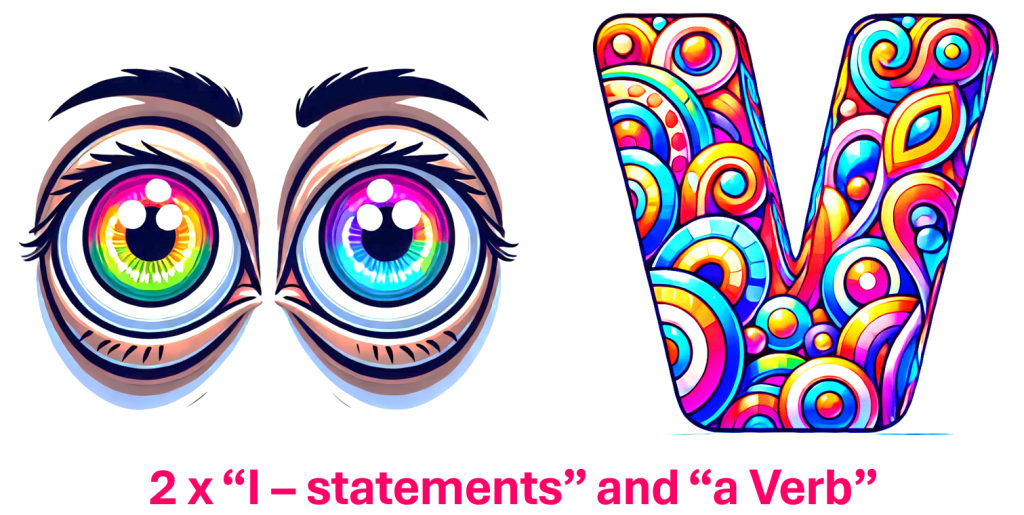
Staff were therefore introduced to two learning routines. (These routines had been discussed previously on this blog.) Through routines like “Two ‘Eyes’ and a V” and “Plus 3”, as a school we’re embedding best practices that encourage inquiry, critical thinking, and responsible use.
The How: Introducing Two Key Routines
The professional learning sessions focused on two adaptable, platform-agnostic routines that can be used with tools like Microsoft Copilot, Google Gemini, and ChatGPT.
- “Two ‘Eyes’ and a V”
This routine is all about crafting high-quality prompts that guide AI tools to provide meaningful and relevant responses. The structure is simple yet powerful. It can be increased in complexity and adapted as students grow and mature in their use of AI. The strategy revolves around students use of natural language to construct prompts on a foundation of:
- Two “I” statements
- A Verb
Two “I” statements: These clarify the student’s role and context (e.g., “I am a Year 8 history student learning about medieval Europe. I want to understand the feudal system.”).
A Verb: This defines the action or outcome (e.g., “Explain to me how the system worked and why it increased societal stability.”).
This routine ensures prompts are clear, focused, and purpose-driven, empowering students to set the direction of their learning.
Examples for Different Age Groups:
Year 5: “I am a Year 5 student learning about Australian animals. I want to learn why koalas sleep so much. Explain this in a way I can understand.”
Year 8: “I am a Year 8 science student studying ecosystems. I want to understand how food chains work. Show me examples of food chains in the rainforest.”
Year 11: “I am a Year 11 economics student preparing for an assignment on market forces. I want to explore how supply and demand affect pricing. Provide three examples of this affect and explain the concepts clearly.”
The routine encourages teachers to allow a wider and more flexible use of pronouns within the routine as students develop. For example, in the following prompt the ‘routine pattern” is followed but the prompt is significantly more complex. Note that this prompt uses “You” as an effective variation on an I-statement.
Year 10: You are an expert tutor, teacher, and academic coach with expertise in Mathematics. I am in Year 10 studying algebra want to test my ability to simply algebraic products and quotients using index laws. I’m finding the work really challenging. Coach me through a series of revision activities that require me to explain how I would simplify equations. If I get anything wrong, do not provide me with an answer. Help me to understand it.
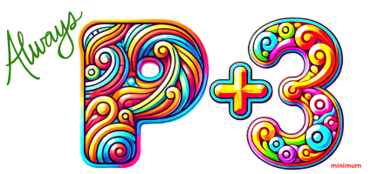
- “Plus 3”
The second routine explored was “Plus 3”. Once the initial prompt is written, the “Plus 3” routine ensures students engage in at least three follow-up iterations within the multi-turn chat. This deepens their inquiry and encourages critical thinking. For instance, a student might:
- Ask for elaboration (“What were the roles of peasants and knights within the feudal system?”).
- Seek clarification (“Can you explain that without using big words?”).
- Challenge the AI’s response (“I don’t think that’s correct because…”).
By iterating in this way, students practice engaging critically with information, enhancing both their understanding and their agency as learners.
Adapting for Different Contexts
These routines are flexible and can be tailored to suit various subjects and year levels:
Junior Years: Teachers can scaffold these routines with sentence starters and simpler prompts. For example, “What more can you tell me about dinosaurs?”
Senior Years: Older students can use the routines for sophisticated tasks, such as preparing for exams, creating scaffolding for assignment tasks, self-grading draft assessment items, simulating debates, or testing theories in-depth.
Teachers: Teachers were also introduced to the use of Retrieval-Augmented Generation (RAG) files and some of the ‘weirdnesses’ of AI use including:
- The possible effects of the use of “please” / “thank you” and positive feedback (“Wow! That’s awesome!”) on the quality of AI outputs.
- The direction to AI to “take a breath” to think before responding and the instruction for the AI to “step me through” the process of generating a response.
Teachers were also encouraged to be imaginative in their prompt writing including in their demands of AI. The skies the limit. In particular, teachers were encourage to to try:
- Using the phrase “Assume the role of…” within a prompt. (Such as “Assume the role of an online ‘choose your own adventure’ game creator…”)
- Using verbs that would direct the AI away from providing ‘answers’ and towards encouraging thinking such as “Coach me on…”, “Tutor me on…”, “Guide me towards figuring out for myself”, “If I get stuck, provide hints for me…”, “Create a simulation game for me that…”, “Interrogate me…”, “Translate for me…”, “Quiz me on…”.
Why These Routines Matter
Both “Two ‘Eyes’ and a V” and “Plus 3” are grounded in research and best practice. They empower students to work collaboratively with AI, treating it like a “very smart intern” – helpful but not infallible. By guiding students to frame thoughtful questions and iterate critically, we’re teaching them not just how to use AI but how to think deeply and independently.
Used thoughtfully and within a culture of transparency, these approaches also help ensure that generative AI becomes a tool for learning rather than a shortcut. The routines encourage inquiry, creativity, and ethical engagement – values at the heart of our pedagogy. As detailed in the forthcoming peer-reviewed article “Using Generative Artificial Intelligence in Education: Initial Principles Developed From Practitioner Reflexive Research“ these strategies align with broader principles of fostering critical thinking and ethical AI use in education. (I look forward to its publication in 2025 and will link it through the Publications page of this blog.)
Looking Ahead
The sessions ended with a call to action: to embed these routines into everyday teaching, adapt them to suit specific classroom needs, and share successes and challenges along the way. By doing so, we hope to continue to provide high-quality learning experiences that prepare our students for an AI-infused future.
I am deeply grateful to everyone who made the sessions this week possible. Special thanks go to our Head of Professional Learning, the Head of Pedagogy, and the Dean of Teaching and Learning for their leadership and support in shaping this initiative. To all the staff who embraced these ideas with enthusiasm and commitment: thank you for your dedication to ethical, effective teaching practices. Your hard work is already making a difference, and our students will undoubtedly appreciate the thoughtful guidance you provide.
Let’s keep the dialogue going and make 2025 a year of innovation and growth for our teaching and learning community.
 Disrupted History
You must be logged in to post a comment.